Two years ago, if you had asked me how industrial cooling worked, I probably couldn't have answered. I wasn't an engineer or a scientist, and I definitely wasn't someone who had spent years thinking about cooling systems or thermal storage. I was a freelance marketer looking for my next client. I thought my job would be learning how to explain someone else's technology. I didn't expect it to change the way I think about the future.
I started at Rebound as a freelance social media manager, tasked with revamping their LinkedIn and building a stronger presence on the platform. Rule number 1 of onboarding a new client: ask for their branding documents and learn as much as you can about the company. Fonts, colors, logos, mission statement, a few digestible descriptions of what they're selling. Simple enough, right?
What I got instead was an email full of PowerPoint decks packed with technical diagrams, performance charts, and a whole vocabulary I'd never heard before. Latent loads. SHR. Demand response. Ice harvesting. During my first month, there were days I had basically no idea what was being discussed. I nodded along while secretly Googling acronyms after meetings. I learned very quickly that engineers have an incredible ability to explain things using words that require even more explaining. Yes, it was a lot to take in, but eventually I knew enough to start creating content.
Still, something didn't sit right with me. I understood what Rebound built. I could explain the features and list the value propositions, but I still didn't feel like I understood the company. I've always believed that the best brands don't start with products. They start with purpose. If you can understand why someone chose to dedicate years of their life to solving a problem, everything else, the technology, the messaging, even the marketing, starts to make a lot more sense.
So I booked a zoom call with the company's Founder and CTO to pick his brain.
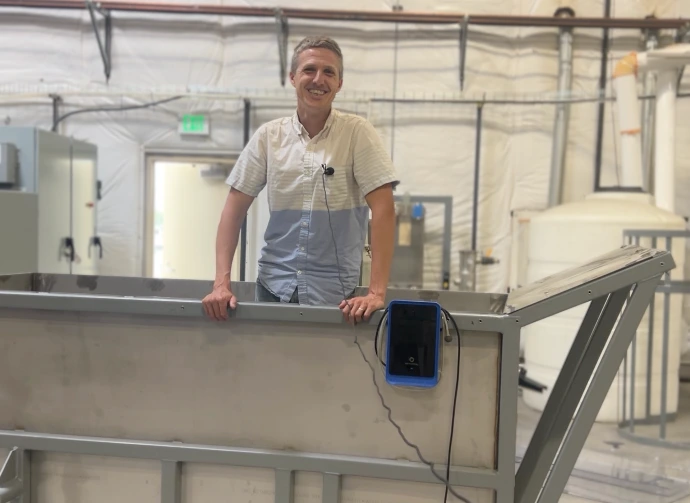
Meet Russell.
A nature-loving, incredibly intelligent man with a passion for what he does so palpable you could feel it through the screen. I came prepared with a list of technical questions, hoping to finally understand the technology well enough to explain it better. But the conversations never stayed technical for very long. We'd start by talking about refrigeration and cooling. Twenty minutes later we'd be talking about energy, climate, or the future.
The more I talked to Russell, the more I realized that the technology wasn't actually the point. At least, not in the way I thought it was. Every conversation started with cooling, but somehow always ended somewhere much bigger. I started noticing a pattern. It wasn't really about food processing or data centers or indoor pools. It was about people wasting energy because systems were designed one way for decades. People paying enormous utility bills. Facilities struggling with peak demand. Communities trying to build more resilient infrastructure.
Cooling wasn't some niche industry I'd accidentally fallen into, it quietly touched almost everything. Food, hospitals, medicine, the internet, manufacturing, sports, energy. Everything. This realization changed the way I thought about the work we were doing. Not because I suddenly understood every technical detail, but because I finally understood why those details mattered.
Earlier this year, we gathered employees from all over the world for a company retreat. For many of us, it was the first time meeting in person. By then, I'd been at Rebound for two years and had transitioned from freelancer to Marketing Manager. At the same time, the marketing team was deep into a full rebranding project. Ironically, the further we got into defining our brand, the less certain we felt about how to describe it.
Like every company, we had a mission statement. We had messaging and positioning. We had product decks and value propositions. But something still felt like it was missing. We knew what we did, we knew who we sold to, we just weren't sure we'd managed to capture why any of it mattered.
So, for the retreat, we decided to do an exercise called The Brand Matrix. The idea is actually pretty simple: you ask everyone questions that force you past the obvious. Things like, "How would you describe Rebound's personality?" or "How do we express ourselves as a brand?" The goal wasn't to talk about products, but rather to get down to the core of who we actually are.
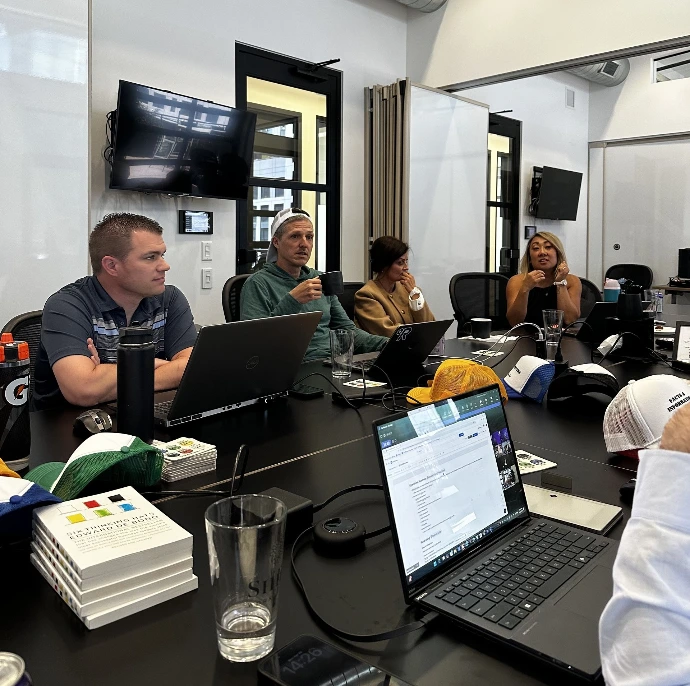
The answers came quickly: engineering-first, agile, practical, sustainable. Every answer was accurate. None of them felt complete. Then someone asked Russell: "Can you tell us again why you started Rebound?"
“To show that humans can still make new things and create value in the world."
Ah, there it was. The same feeling I'd had during that very first Zoom call, finally put into words. Not a better mission statement or a new marketing slogan, just the truth. And with it, came the realization that my job isn't really about marketing cooling equipment. It's about telling the story of why people dedicate years of their lives to solving problems most of us never think about.
Because somewhere out there, someone is trying to keep food from spoiling. Someone is trying to cool a hospital. Someone is trying to reduce the energy a city consumes. Someone is trying to make sure the infrastructure we all depend on is ready for the future. And behind every one of those challenges are people choosing to build something better.
The older I get, the more I realize technology has never really been about machines. It's always been about people. The problems we choose to solve say something about who we are. I came to Rebound thinking I was here to help explain a technology. Two years later, I think I'm helping tell a much bigger story. One about curiosity, ingenuity and optimism. About believing we can still build things that matter.
At our retreat, after hearing Russell's answer, our team finally found the words we'd been searching for all along:
“Bridging the gap between the technology we have and the technology we need — where human ingenuity meets the world's cooling crisis.”
When I first joined Rebound, I thought I was here to market a product. Now I think I'm here to help tell the story of the people building a future they're optimistic enough to believe is still possible.